Monday, 18 April 2011

HTC SENSATION FULL SPECS....... ... ..


HTC Sensation
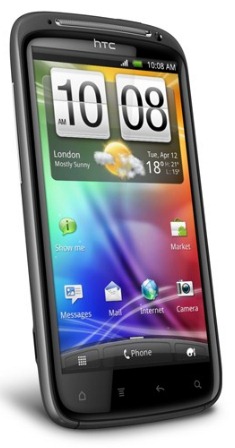
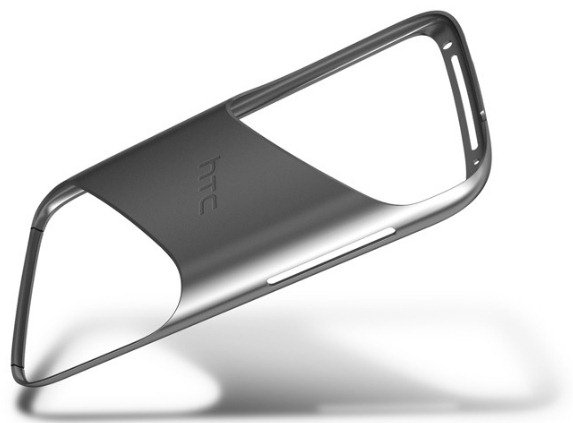
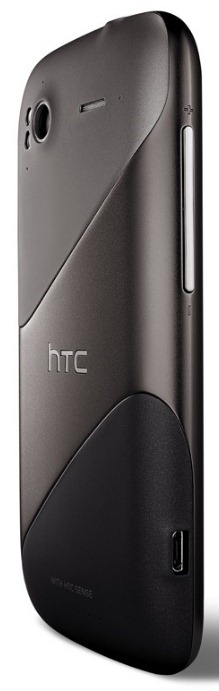
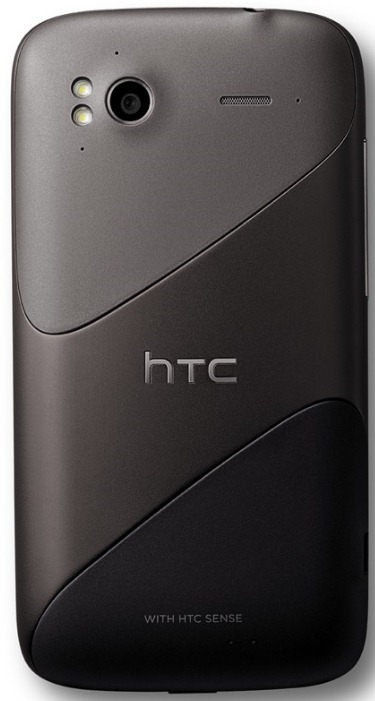
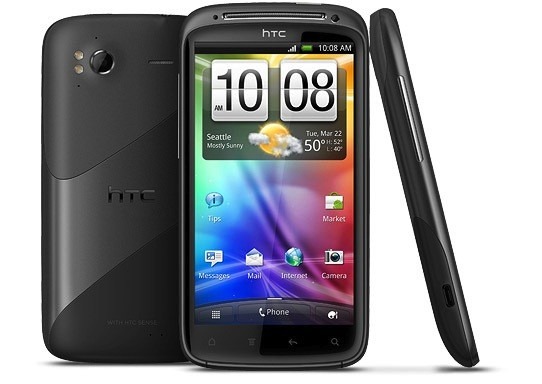
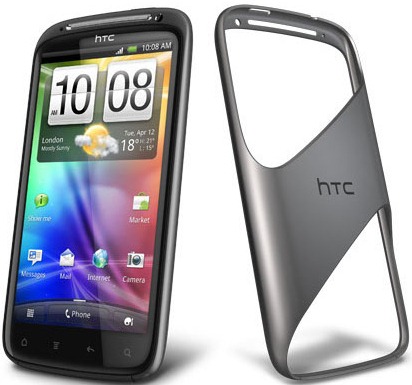
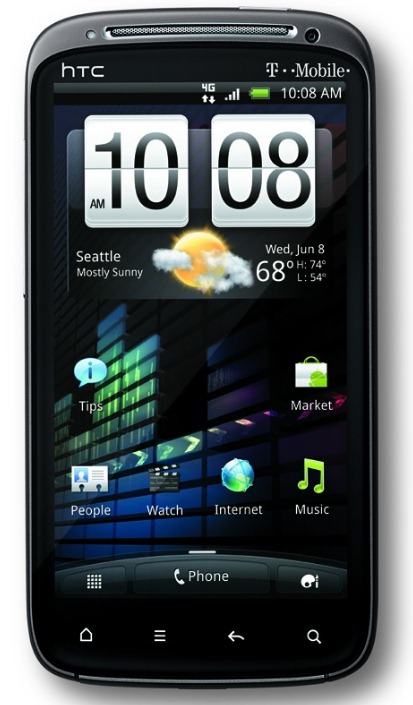
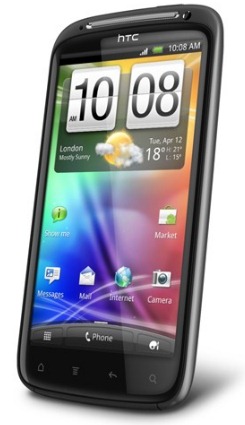
HTC Sensation is an Android powered dual-core smartphone from HTC, having all the notable high-end specifications. It is also known as HTC Pyramid.
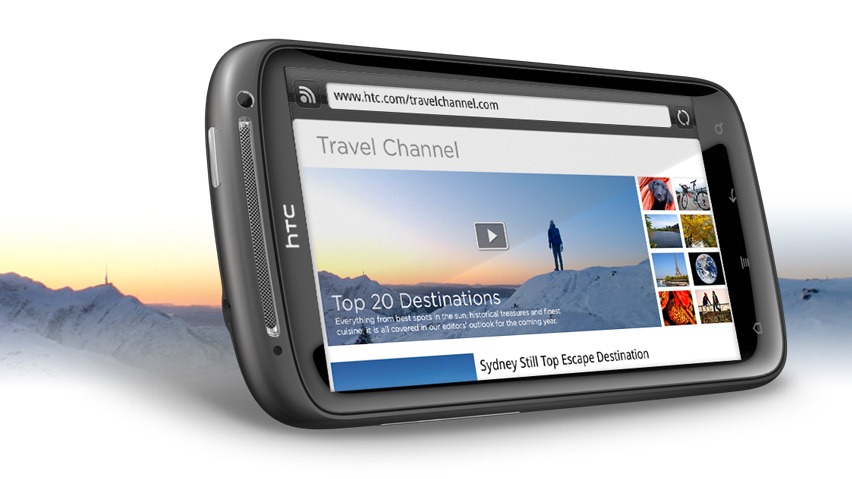
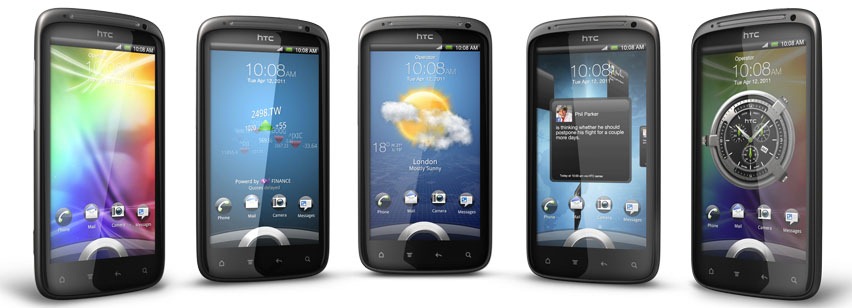
HTC Sensation comes with Android 2.3 Gingerbread OS flavored with HTC Sense UI 3.0 customizations, running on a dual-core 1.2GHz Qualcomm Snapdragon processor, sporting a 4.3 inches QHD display with a 960 x 540 pixel resolution, equipped with an 8 Megapixels rear-facing camera with dual-LED flash, that can capture full HD 1080p video at 30 fps with full stereo sound, and an additional front-facing 1.3 megapixels camera, HSPA+ connectivity with 14.4Mbps download speeds, an improved weather app, and HTC Watch, 768MB RAM, 802.11 b/g/n Wi-Fi, DLNA capability for wirelessly streaming media from the phone to TV or PC, Webkit/533.1 browser Android Market and more. The new Video Trimmer tool enables users easily share these videos with their friends over social networking sites.
HTC SensationHTC Sensation
HTC Sensation
Full Technical Specifications Of HTC Sensation
Network
2G NetworkGSM 850, 900, 1800, 1900 MHz
3G NetworkUMTS/HSDPA 900, 1700, 2100 MHz
Dimensions
L x B x H126.1 x 65.4 x 11.3 mm
Weight148 grams (5.33 ounces)
Form FactorCandybar
Display
TypeSuper-LCD Capacitive Touch Display
Size4.3 inch
Colours & Pixels16 Million Colors & 960 x 540 pixels
Input/User Interface
InputHTC Sense UI 3.0
Gorilla Glass
Multi-Touch
Proximity Sensor for Auto Turn On or Off
Accelerometer sensor for UI auto-rotate
Gyro-Sensor, G-Sensor
Ambient Light Sensor
System Properties
Operating SystemAndroid 2.3 Gingerbread
CPU1.2GHz Dual-Core Qualcomm Snapdragon Processor
768MB RAM
Storage Capacity
Internal Memory1GB Internal Memory
Expandable Memorymicro-SD card slot for expansion up to 32GB
Browser & MessagingHTML, WAP 2.0/xHTML, HTML 5 support
MMS, SMS, IM, Email, Push Email
Camera
Still (Rear)- 8 Megapixels
- 3264×2448 pixels
- Dual-LED Flash
- Auto Focus, Geo-tagging, Face detection
Secondary (Front)- 1.3 Megapixels
Video Recording- 1080p HD video recording capability
- 1920×1080 pixels
- 720p HD video recording capability
- 1280×720 pixels
Connectivity
DataGPRS, EDGE, HSDPA, HSUPA
USB & Bluetoothv2.0 micro USB
BluetoothV3.0 with A2DP
WLANWi-Fi 802.11 b/g/n
DLNA
Headset3.5mm stereo headset jack
RadioStereo FM with RDS
GPSA-GPS
3GHSDPA 14.4 Mbps
HSUPA 5.76 Mbps
Music & Video
Music FormatMP3, AAC, WMA, WAV, AMR, OGG, MIDI, M4A
Video FormatXviD, WMV, MPEG4, 3GP, 3G2
Battery
TypeLi-Ion 1520mAh Standard Battery
Standby TimeUp to 400 Hours (3G)
Up to 350 Hours (3G)
Talk TimeUp to 400 Mins (3G)
Up to 495 Mins (2G)
Other FeaturesAdobe Flash Player 10.2
Wi-Fi Hotspot
HTC Watch, Weather App
Google Search, Maps, Android Market
Gmail, Google Talk
Picasa integration, YouTube, Twitter
Digital Compass
Colors AvailabilityBlack
HTC Sensation HTC Sensation
HTC SensationHTC SensationHTC SensationHTC Sensation

Price & Availability
Currently we don’t have the exact release date and price info of the HTC Sensation 4G smartphone, which is hitting T-Mobile carrier in the U.S. this summer.
It will launch in the UK, Germany, and the rest of HTC’s "key" European markets in mid-May, with Vodafone scoring a Europe-wide exclusive for "a couple of weeks. in Q2 of this year"

Sunday, 17 April 2011

Rumor: Motorola may cancel the Droid Bionic... ...

At CES in January, Motorola made a point to show off three new devices: the Motorola Atrix for AT&T, the Motorola Xoom tablet running Honeycomb, and the Motorola Droid Bionic: a 4G LTEsmartphone destined for Verizon Wireless. The Droid Bionic has appeared on a number of leaked release slates, even though Motorola and Verizon have both declined to say when the phone will be released. Now rumors are popping up that due to issues in testing, the phone may be scrapped altogether.
The rumors started over at Howard Forums, and then wound up over at sites like Droid Life and Pocket Now, but for its part Motorola and Verizon Wireless are keeping tight-lipped about them. Some people point out that the Droid Bionic is entirely too late in its development and testing cycle to signal a cancellation. A delay may be possible, but not an outright retreat from the market.
Others point to a litany of rumored issues with battery life, and the fact that Motorola may be releasing a new version of MotoBlur with the Droid Bionic as all signals that all’s not well with the device. It’s also possible that Motorola may be refocusing its efforts on a new handset codenamed Droid Targa, which reportedly looks more like the Droid X with rounded edges and a smoother case design.
Still, the Bionic would be Verizon Wireless’ second LTE device (after the HTC Thunderbolt,) and its first dual-core LTE phone. Even though the hardware is very similar to the already-released Motorola Atrix on AT&T, Motorola is still doing a lot of things for the first time with the Bionic, the least of which is putting in an LTE radio.
It’s important to point out that all of this is rumor at the moment, and Motorola isn’t about to acknowledge any design or testing difficulty they have or haven’t had with the Droid Bionic by responding to them. Until they or Verizon Wireless pipe up with a release date for the Bionic, the speculation is likely to continue

MeeGo To Be Picked Up For Smartphone Use By LG?


MeeGo started out with such promise. It was a combined effort between Nokia and Intel, and it looked like it would soon become the go-to operating system for tablets and MIDs in the years ahead. But then, something happened. Something called iOS and Android, two operating systems that found their way onto tablets and have since dominated the market, leaving no room for the likes of MeeGo and Windows 7. Not to mention, Nokia since ditched their efforts in MeeGo and Symbian in order to focus on a Windows Phone 7-based future. 


But there still seems to be a bit of life remaining in MeeGo. Despite the fact that the bulk of the support is gone, it was a clever OS with a nice UI and a lot of good thoughts behind it. And those thoughts are seemingly interesting to LG Electronics. A new Reuters report confirms that LG is now moving forward with plans to adopt the Linux-based MeeGo, picking up mostly where Nokia left off. Valtteri Halla, a member of the technical steering group of MeeGo, had this to say: "It's opening opportunities for the others to come in. Discussions are taking place. You'll see things coming out this year, pretty soon."


In the past, Nokia's prominent role in MeeGo frightened other phone makers away, but now that they're gone, an opening is obviously there. A spokesperson for LG did say that the company has no definite plans to produce MeeGo systems outside of in-car-based rigs, but they didn't deny the rumors. It also seems plausible to think that a company with one foot in the MeeGo door would expand that somewhat and possibly use it to promote new handsets; it's hard to stand out in the crowd of Android phones, but being one of the only MeeGo phones would definitely make the news.

Now, we just have to kick back and wait to see if LG actually follows through on any of this. Would you buy a MeeGo phone? Definitely sounds tempting...

DroidDream Malware in Android Market... ...


There were over 50 applications discovered on the Android Market that contained malware called “DroidDream”. Malware can compromise your data by taking over your phone. The apps were removed immediately when Google became aware of it. It’s unknown if the measures removed them from the infected phones. More than 200,000 devices may have been infected. It has been called “the mother of all Android Malware”.

It will steal anything it can; product info, user ID and more. The biggest problem with “DroidDream” is its ability to download more code. This makes it impossible to know what the app can do once it’s installed and leaves open the possible problems. Once the app starts it uses its permissions to start infecting the phone and working. As a result of this and other threats security companies are now beginning to offer anti-virus and anti-malware software for Android devices.
This is a big concern for me as I recently upgraded to a smartphone running the Android OS. I have installed the “Lookout” app which scans apps as you initially download them and it scans them again when the app updates.
The overall consensus is that it’s not necessary to have ant-virus software installed on smartphones. I think this may have been true when smartphones were first becoming prevalent. But with increased usage it has become a larger target. I feel you should at least have an app or program that scans any apps you download. If you plan on using the phone for banking and other sensitive items I would recommend installing an anti-virus program.